EVs · 5 min read
Tesla Roadster Cold Gas Thruster Performance and Specs
Learn how the upcoming Tesla Roadster utilizes cold gas thruster technology and what to expect for its 2028 production launch.
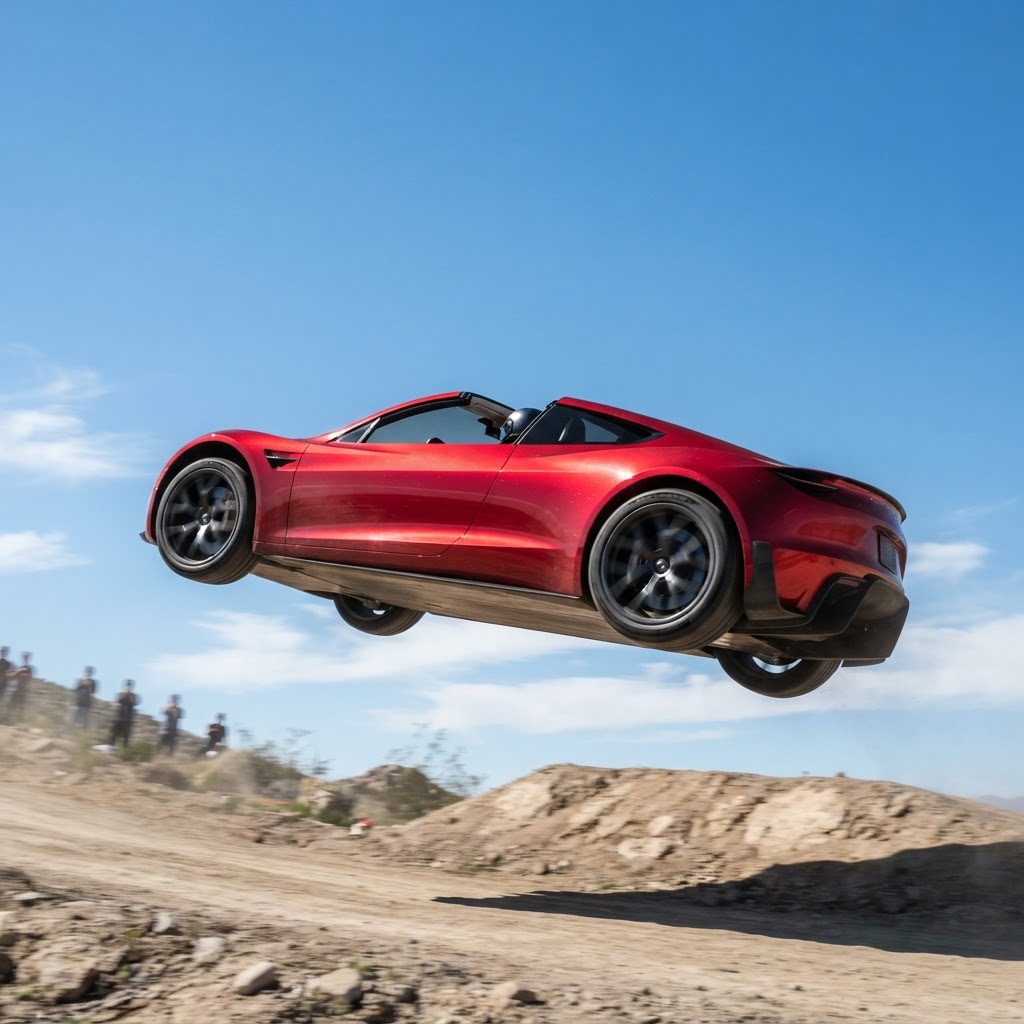
AI-generated image for illustration, not a photo of the actual event.
Quick answer
The Tesla Roadster uses a cold-gas thruster system that releases high-pressure nitrogen from carbon-overwrapped pressure vessels to provide stabilization and performance. This technology is featured on the Rocket trim variant, which is currently a prototype with no guarantee of road-legal status for its aerial capabilities.
What we know
- Tesla expects to start production of the second-generation Roadster in 2028.
- The thruster system uses 600 liters of nitrogen stored at 10,000 PSI in carbon-overwrapped pressure vessels.
- Three distinct trim levels are planned including Performance, Thrust, and Rocket.
- The Rocket trim uses 10 nozzles to provide forward, upward, and lateral movement.
- The cold gas thruster system is not a combustion-based engine.
Tesla has unveiled new footage of the second-generation Roadster prototype showcasing its advanced engineering and the potential of its cold gas thruster performance.
While the video displays the vehicle performing complex aerial stunts, the high-performance Rocket variant remains a prototype with significant technical and regulatory hurdles expected before the projected 2028 production date.
How does the Tesla Roadster cold gas thruster technology work?
The Tesla Roadster cold gas thruster system operates by releasing high-pressure nitrogen stored in carbon-overwrapped pressure vessels to generate force without combustion.
This system mirrors the attitude-control hardware found on the SpaceX Falcon 9 rockets, using nitrogen as a propellant to provide stabilization during flight.
The hardware utilizes all-electric actuators to manage the flow of gas through specific nozzles. On the Rocket trim, the vehicle is equipped with a 600-liter capacity of nitrogen pressurized at 10,000 PSI, which is released through a configuration of 10 nozzles to enable precise control.
- Four rear-mounted nozzles produce over 80 kilonewtons of thrust for acceleration.
- Four downward-facing nozzles provide lift for aerial movement.
- Two nose-mounted nozzles allow for steering control during flight.
- Carbon-overwrapped pressure vessels ensure high-pressure containment.
| Component | Function |
|---|---|
| Nitrogen Storage | 600-liter capacity at 10,000 PSI |
| Nozzle Count | 10 total nozzles on Rocket trim |
| Actuation | All-electric stabilization |
Aerospace structural design influences
Tesla has drawn heavy design inspiration from the SR-71 reconnaissance aircraft and the F-35 fighter jet. The construction prioritizes weight reduction by utilizing magnesium, titanium, and carbon fiber materials.
The vehicle also features specialized Ano White paint, which uses aerospace techniques to provide both UV and cryogenic protection for the high-pressure system.
These technical advancements, including the Tesla engineering approach, highlight the company's focus on non-traditional automotive movement.
Tesla Roadster trim level configurations
Tesla offers the second-generation Roadster in three distinct configurations to suit different performance and capability requirements.
The entry-level model is the Performance trim, while the more advanced versions are the Thrust and Rocket models. These variations distinguish between a standard road-ready car and specialized air-capable prototypes.
The Performance trim is designed as a two-seater and features active aerodynamics. The Thrust trim is a race-ready two-seater that incorporates rear-mounted thrusters.
- Performance: Road-ready two-seater, with a $50,000 reservation price.
- Thrust: Race-ready version with cold-gas thrusters, with a $250,000 reservation price.
- Rocket: Single-seat prototype with full-perimeter thrusters for aerial movement.
| Trim Level | Seats | Primary Feature |
|---|---|---|
| Performance | 2 | Active aero/Suction |
| Thrust | 2 | Rear-mounted thrusters |
| Rocket | 1 | Perimeter thrusters |
Performance specifications
All trim levels are reported to reach top speeds greater than 230 miles per hour and provide a range of 300 miles. The suction system is specifically designed to maintain traction, capable of holding over 2 g's in a corner at speeds between zero and 50 mph.
Drivers interested in these high-end specifications should monitor latest news for updates regarding the valuation of these specialized vehicles.
Engineering challenges: Refill times and weight
A primary hurdle for the Roadster's thruster system is the current refill time for the high-pressure nitrogen tanks.
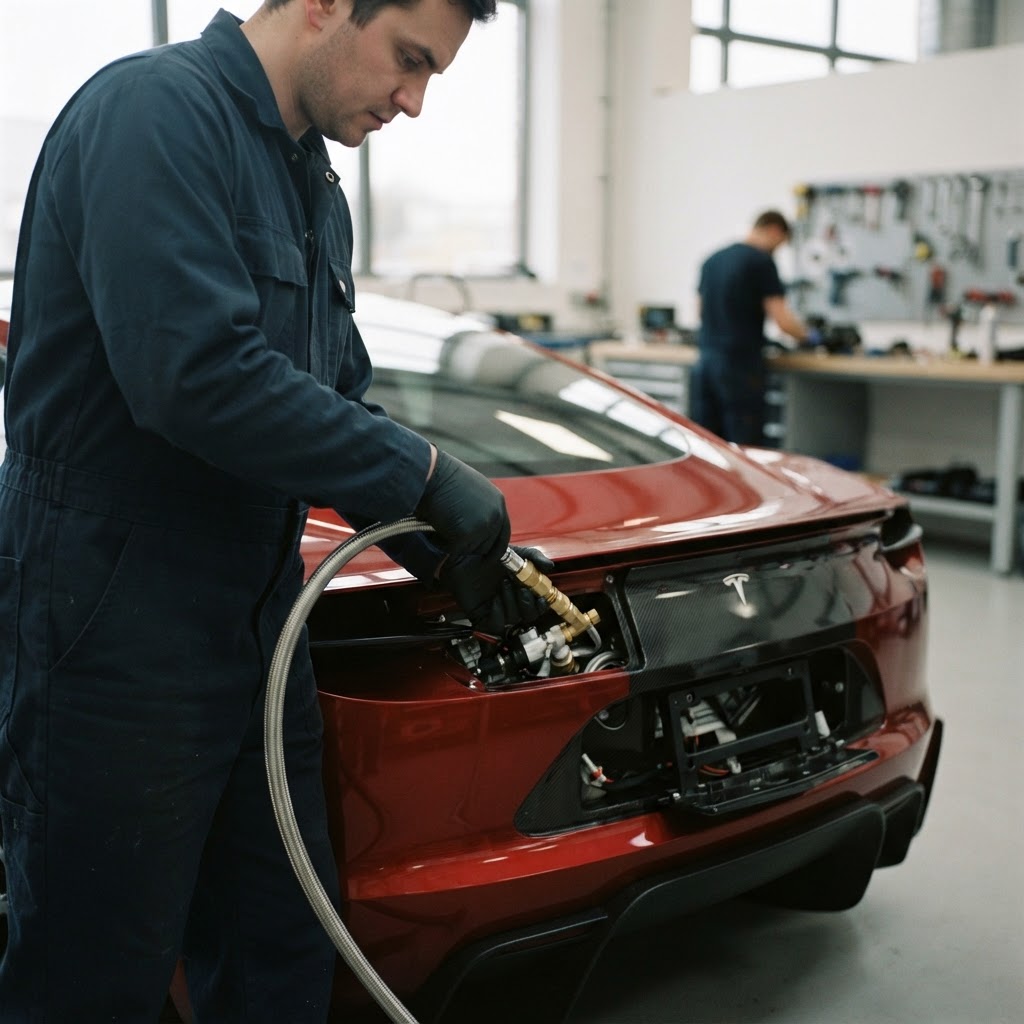
Refilling the Roadster's thruster system requires several hours for just a few seconds of operation. Tesla is actively working to reduce this refill duration to under 30 minutes to make the system more viable.
The weight of the system and the need for frequent refills are significant factors that currently limit the utility of the thrusters to short, demonstration-style events.
- Current refill time: 2 to 6 hours.
- Goal refill time: Under 30 minutes.
- Capacity: 200 liters standard to 600 liters for the Rocket trim.
Aerial stunt capabilities
Demonstration footage featured a dummy driver performing complex maneuvers like a kick-flip, an upside-down dive from a half-pipe, and a jump-spin over a Tesla Semi. The nitrogen system is used solely to maintain stability and control the rotation of the vehicle during these maneuvers.
For those managing high-performance fleets or seeking specific parts, maintaining these exotic systems will likely require specialized support.
What it means for you
Potential buyers and enthusiasts should maintain realistic expectations regarding the road-legal status and availability of the Roadster variants.
Tesla has explicitly stated that it cannot guarantee the flying version of the Roadster will reach consumers or satisfy regulatory safety standards. Elon Musk has advised that individuals prioritizing safety should not purchase the Roadster, given its experimental nature.
Because the Rocket trim is not approved for public road use, shoppers should treat it as a prototype rather than a production-ready vehicle at this stage. Always research the latest policy updates before placing reservations for unreleased vehicle configurations.
- Evaluate whether you prioritize standard vehicle safety over experimental engineering.
- Verify the intended use, as the Rocket trim is restricted from public roads.
- Review reservation terms carefully as production is not scheduled until 2028.
Maintenance considerations
For future owners, the reliance on high-pressure nitrogen means that routine service will be significantly more complex than standard electric vehicle maintenance. The necessity for high-pressure system checks will require specialized facilities.
Staying informed through official company announcements remains the best way to track the development of this vehicle.
What happens next
Tesla has confirmed that it plans to begin production of the second-generation Roadster in 2028.
Engineering teams are currently focused on optimizing the thruster refill process and refining the aerodynamic performance of the vehicle. Further updates on the final exterior design, interior configuration, and potential regulatory approvals will be released as the production window nears.
- Continued testing of thruster stabilization for aerial flight.
- Refinement of the 30-minute refill goal for nitrogen tanks.
- Finalization of production specifications for the 2028 release.
Roadmap toward 2028
While the 2017 concept has evolved significantly, the current focus is on integrating the SpaceX-derived thrusters into a mass-producible chassis. The company continues to test the limits of what a car can achieve in terms of acceleration and downforce.
Keep checking back for more updates on this landmark industry project.
Questions people are asking
How do the Tesla Roadster thrusters work?
The thrusters function by releasing high-pressure nitrogen gas from carbon-overwrapped pressure vessels through nozzles, providing stabilization and acceleration without the use of combustion.
Is the new Tesla Roadster street legal?
Tesla has indicated it cannot guarantee the flying version of the Roadster will be street legal, and specifically notes the Rocket trim is not approved for public road use.
What is the top speed of the Tesla Roadster?
Tesla specifies that all Roadster trim configurations are designed to reach top speeds greater than 230 miles per hour.
Does the Tesla Roadster actually fly?
The Roadster utilizes thrusters to perform aerial maneuvers like jumps and spins, but it is not a flying vehicle in the traditional aviation sense.
What are the different Tesla Roadster trim levels?
The vehicle is available in three configurations: Performance, which is the road-ready base; Thrust, a two-seater race version; and Rocket, a single-seat air-ready prototype.
Are the thrusters on the Tesla Roadster made by SpaceX?
Tesla utilizes cold-gas thruster technology that functions similarly to the attitude-control hardware used on SpaceX Falcon 9 rockets.
How we reported this
By Motonect News Desk, The Motonect News Desk covers recalls, prices, EVs and policy for US car owners and shoppers. Facts were checked across 5 independent sources and written in our own words. AI tools help collect facts and draft; every claim is checked against the sources and for original wording before publishing. Our editorial standards
Sources (5)
- PrimaryTesla: Roadster – Electric Sports Car | Tesla
- TechCrunch: Tesla reveals SpaceX-powered Roadster that flies and falls with style
- EngineerPal: Tesla Roadster Cold-Gas Thrusters Explained - engineerpal.com
- InsideEVs: Tesla's Kickflipping Roadster Looks Like A Great Way To Lose Your Lunch
- Motor1.com: POV Video Shows What It
More on Tesla Auto News
Tesla Auto News · Nov 6, 2026
Tesla Cybertruck Production Ending 2027: Impact on Owners and Sales
Tesla will phase out Cybertruck production by mid-2027 at Gigafactory Texas to reallocate manufacturing capacity toward its new autonomous Cybercab fleet.
Read
Automotive Pricing News · Nov 24, 2026
2027 Corvette ZR1X Dealer Markup: The $400,000 Premium Explained
An investigation into the $400,000 market adjustment applied by George Nunnally Chevrolet to a 2027 Chevrolet Corvette ZR1X and the implications for buyers.
Read
Automotive Aftermarket News · Nov 11, 2026
C8 Corvette Manual Transmission Conversion: The Peitz Performance Build
Peitz Performance has introduced a functional manual transmission conversion for the C8 Corvette, utilizing a six-speed Tremec transaxle and custom engineering.
Read